If you’re anything like me, you’re tired of hearing about Artificial Intelligence by now – especially considering that AI itself has been around since the 1950s. What most people are talking about these days is generative AI – deep-learning models that use existing data to generate content, including text and images.
Granted, it can be tempting to use this type of AI for mundane tasks (“Here’s what’s in my fridge. What can I cook up for dinner?”). After all, AI chatbots like ChatGPT and Perplexity are popular for getting quick results with minimal input. But just because something’s efficient doesn’t mean it’s effective. As my valued translation colleague Joachim Lépine puts it: output ≠ outcome.
Let’s look at what AI translation tools can and can’t do, the risks they bring and why human connection still matters in international brand communication.
What AI translation tools do well
There’s a time and a place for AI translation tools.
Let’s say you need to know what your Polish business partner told your team lead in that email you were CC’d on. You can get the gist by using your operating system’s translation plug-in or (safely!) feeding the text into your AI tool of choice, asking it to translate it into your native language.
Want to find out what Bad Bunny sang about at the 2026 Super Bowl halftime show? ChatGPT – and a bunch of enthusiastic fans on TikTok – have got you covered. Even auto-translated AI summaries can do a great job of keeping you in the loop.
In a nutshell, AI translation tools give you some type of output quickly.
Where AI falls short
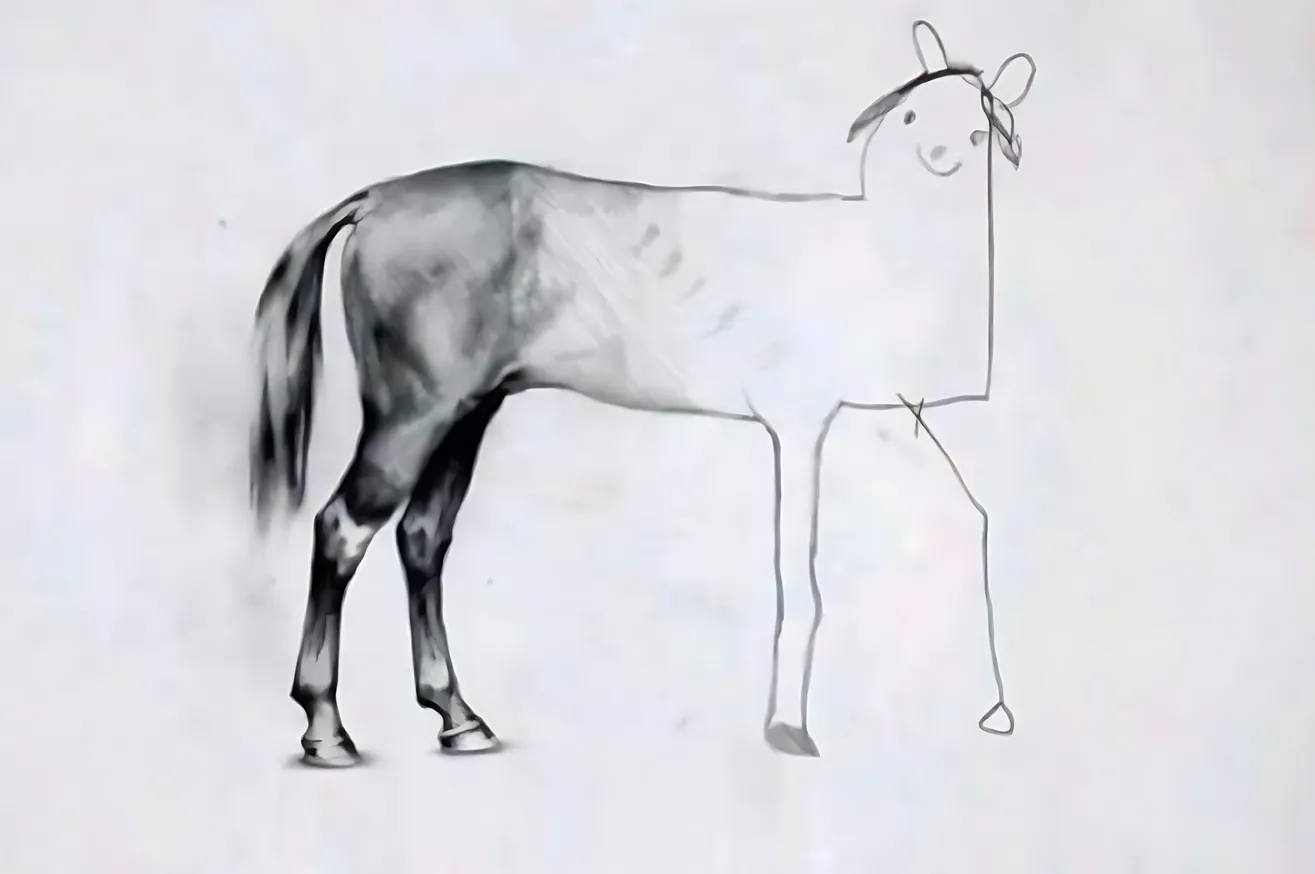
AI tools are trained to generate responses based on patterns in existing data, verified or not. With that in mind, it’s important to remember that AI is a tool, not a replacement for skilled labour.
Think about it: Would you board a plane with no pilot? Enter a deposition without legal representation? Risk offending a whole nation because your translations fell flat? The higher the stakes, the less we should take what AI tools spit out as valuable information.
Take it from Sam Altman himself, CEO of OpenAI. He says people shouldn’t trust ChatGPT as much as they do because ‘AI hallucinates.’
AI can’t produce original, logical thoughts. At best, it can be our co-pilot, not our compass.

The risks of using AI for translations
Aside from the legal, environmental and copyright issues associated with AI technology, you never have a guarantee that AI-generated output is accurate. In fact, this is what you’ll find at the bottom of your ChatGPT search:
“ChatGPT can make mistakes. Check important info.”
As a business, you’re responsible for any content you put out there, whether it’s company-internal (meeting agendas, financial reports) or intended for the general public (flyers, blogs, websites).
Any inaccurate output can damage your credibility and reputation. And the sneaky thing is that you probably won’t even know – at least not right away. Some unhappy customers may leave disgruntled reviews, while others might silently turn away.
As I’m sure was the case when German shoppers saw this email newsletter pop-up, for example:
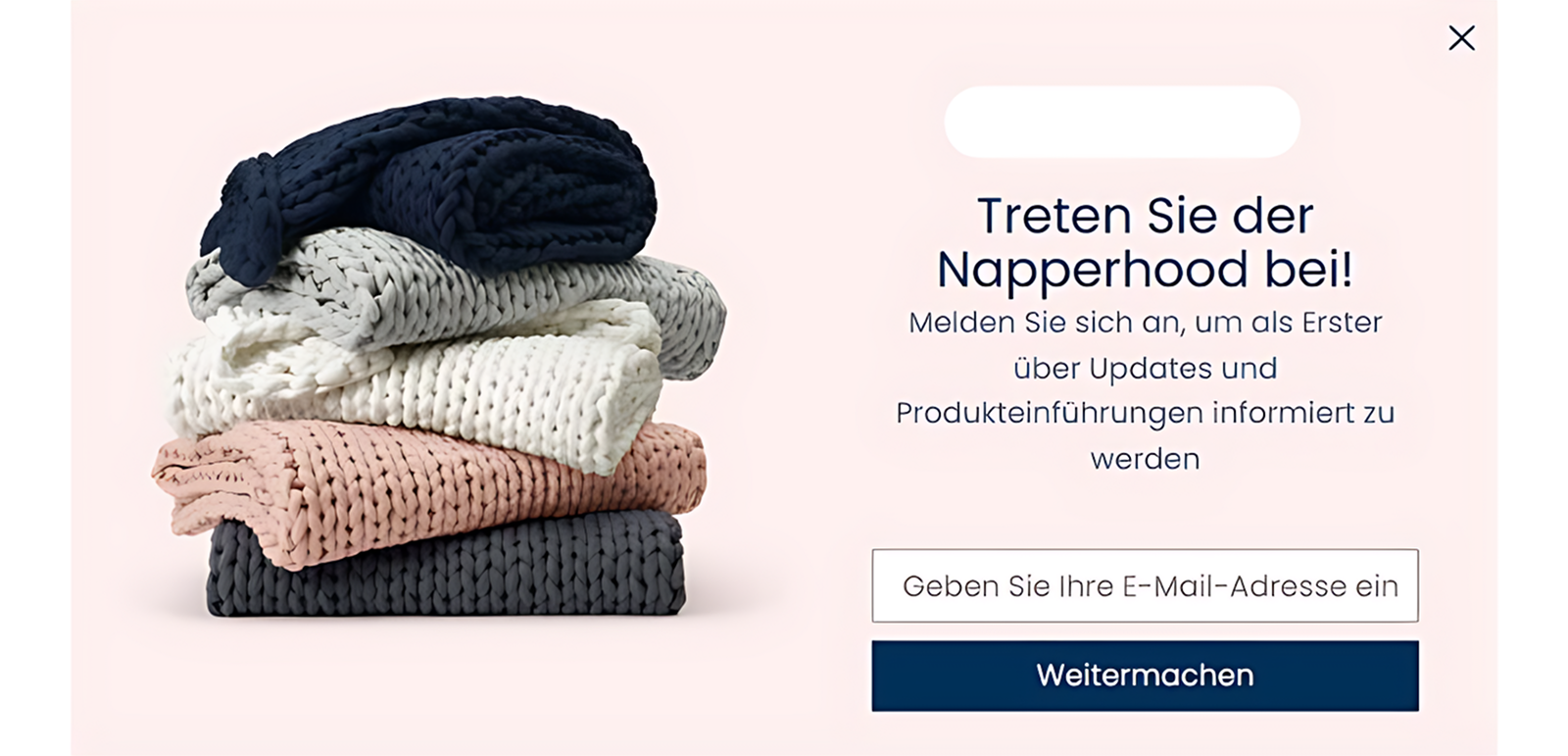
This brand sells sleep products like weighted blankets and uses the term “Napperhood” (“nap” + “neighbourhood”) to describe its community of customers and fans.
During the translation step, little to no effort was made to adapt this piece of content for a German-speaking audience, resulting in:
- Literal translation from English (“Join the Napperhood community!”)
- No cultural equivalent of “to nap”, making the pun fall flat
- Lack of gender-inclusive language (“Erster” = male version of “first”, despite the target market being female)
- Uncommon wording (“Produkteinführungen” should be “neue Produkte”; “Weitermachen” should be “Weiter” or, in this case, “Anmelden”)
When I saw this, as a potential customer, I got sceptical of what else this brand might be skimping on and clicked away (right after taking this screenshot for content purposes, of course).
Another risk of using AI to fill your translation needs is that your content could end up being inconsistent or sounding like other brands.
And it’s easy to see why. Let’s say you ask an AI tool like Perplexity to create a German version of your English website. Left to its own devices, the AI tool will make stylistic and brand-voice choices for you. The result is often a chaotic mix of the “du” and “Sie” forms of address, with sections that are either overly formal or too conversational, or that contain words you would never use to describe your products or services (so-called “off-brand words”). You’ll end up sounding scattered rather than coming across like a well-established brand that knows what it stands for and who it’s talking to.
The importance of human connection in transcreation
Like any tool, generative AI is meant to aid professionals rather than replace them. AI translation tools can come in handy for translation professionals for research or brainstorming tasks, but it’s the human expert who ultimately signs off on the text.
Especially when it comes to transcreation, empathy takes centre stage – a skill that’s still exclusive to humans.
While AI tools can be decent at providing direct translations, transcreations go deeper. They’re about understanding the brand’s core message and adapting it for a whole new audience.
The ‘strict’ translation part of any transcreation project is actually quite limited. It’s the human back-and-forth (check-in calls, back translations, rationales, etc.) and the strategic, on-brand thinking that creates the magic that turns content into conversions.
And the reason for that is simple: your audience wants to feel understood and respected before buying from you and becoming loyal brand advocates. If that’s your goal, human localisation is the key to your international customers’ hearts!
Want to work with a human to bring your brand’s personality to life in German?
view here