When handling multilingual content, the words you use – and how you adapt them – can make the difference between sounding local and getting lost in translation. It all starts with understanding the difference between translation and transcreation – two terms that often cause confusion. Both involve transferring content from one language (the source) into another (the target). Yet, they’re not quite the same.
In this blog post, we’ll look at the difference between these two terms – and why that matters for English-speaking brands expanding to Germany.
Let’s start with the simpler of the two: translation.
What is translation?
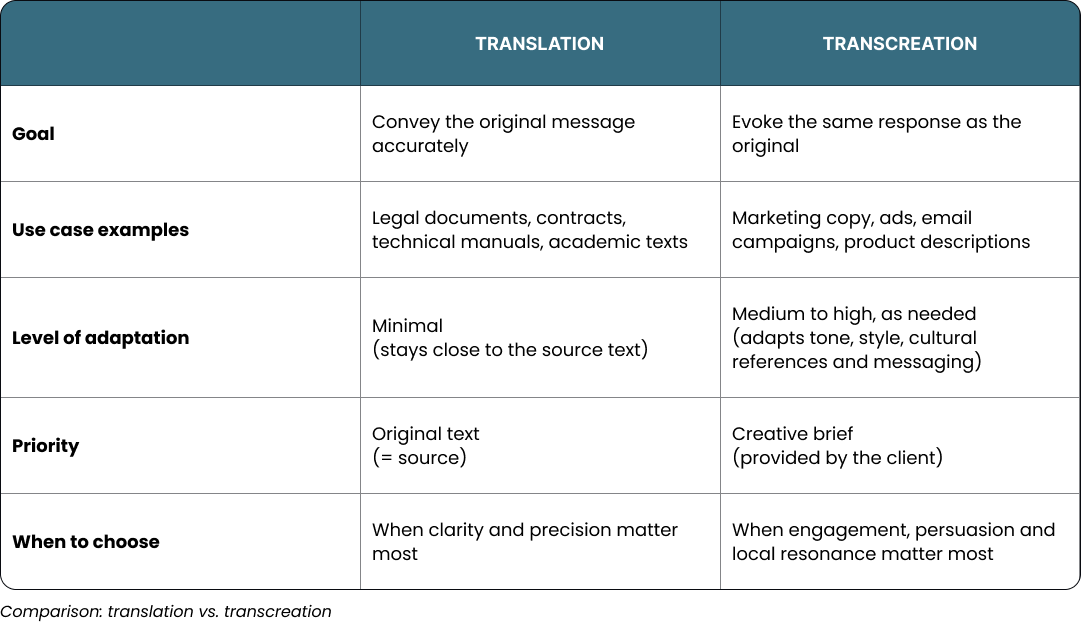
Translation is the process of conveying a message in another language with the intent of telling the reader what the original says.
In this case, the audience usually knows the text was written in one language and reproduced in another. Precision takes priority here: the translator’s job is to stay faithful to the source text.
Common use cases for translation include documents, contracts, technical manuals and academic texts.
What is transcreation?
Transcreation is the process of adapting marketing content from one language and culture to another, combining translation and copywriting skills. It’s also often called marketing or creative translation.
While transcreation also involves transferring meaning between languages, its purpose is different: to spark the reader’s emotions and prompt the same response as the original.
With transcreation, the reader ideally doesn’t even realise that there was a ‘before’ text. Instead, they should feel like this content was written specifically for them.
As such, transcreation requires more flexibility (and effort) to strike the right balance between strategic and cultural adaptation without losing the core meaning.
Here’s a quick overview to show you how the two compare in practice:
Common misconceptions about translation and transcreation
A common misconception is that transcreation means rewriting content from scratch. While it does allow for liberal recreating, it’s still rooted in the intent, messaging and goals of the original content. The challenge lies in knowing how much to adapt to make the content resonate with a new audience.
Another misconception is that translation and transcreation are two completely separate processes. In reality, they exist on a spectrum: the more persuasive a piece of content needs to be, the more the linguist moves from straightforward translation toward transcreation. Most projects fall somewhere in between. Knowing whether to use translation or transcreation is rarely an either/or decision. Longer texts often call for a mixed approach: headlines, CTAs or persuasive passages may benefit from transcreation, while factual sections are translated more directly.
Ultimately, it’s the transcreator’s job to know when to apply which skill – always remembering that clear messaging beats clever wordplay.

Why the distinction matters for brands entering the German market
The reason this distinction matters for brands expanding into the German market is that it’s not enough for your content to be understood. It also needs to connect with your audience in a way that feels natural and credible. Put simply, your German customers want to feel respected before trusting you with their time, energy and money.
German-speaking consumers value clear, logical messaging and factual information; they tend to prefer substance over the ‘flowery’ language often found in UK and US marketing.
That’s where transcreation comes in. It takes preferences and behaviours like these into account and adapts tone, cultural references and brand voice accordingly. The result: your message feels native rather than translated.
Let’s look at a real-life example from a UI (user interface) localisation project that shows this in action:

Framing this prompt as a question puts German users more at ease and invites a moment of reflection. The straightforward translation works too, but the transcreation puts empathy first – and that’s often what makes the difference.
Making the right choice between translation and transcreation
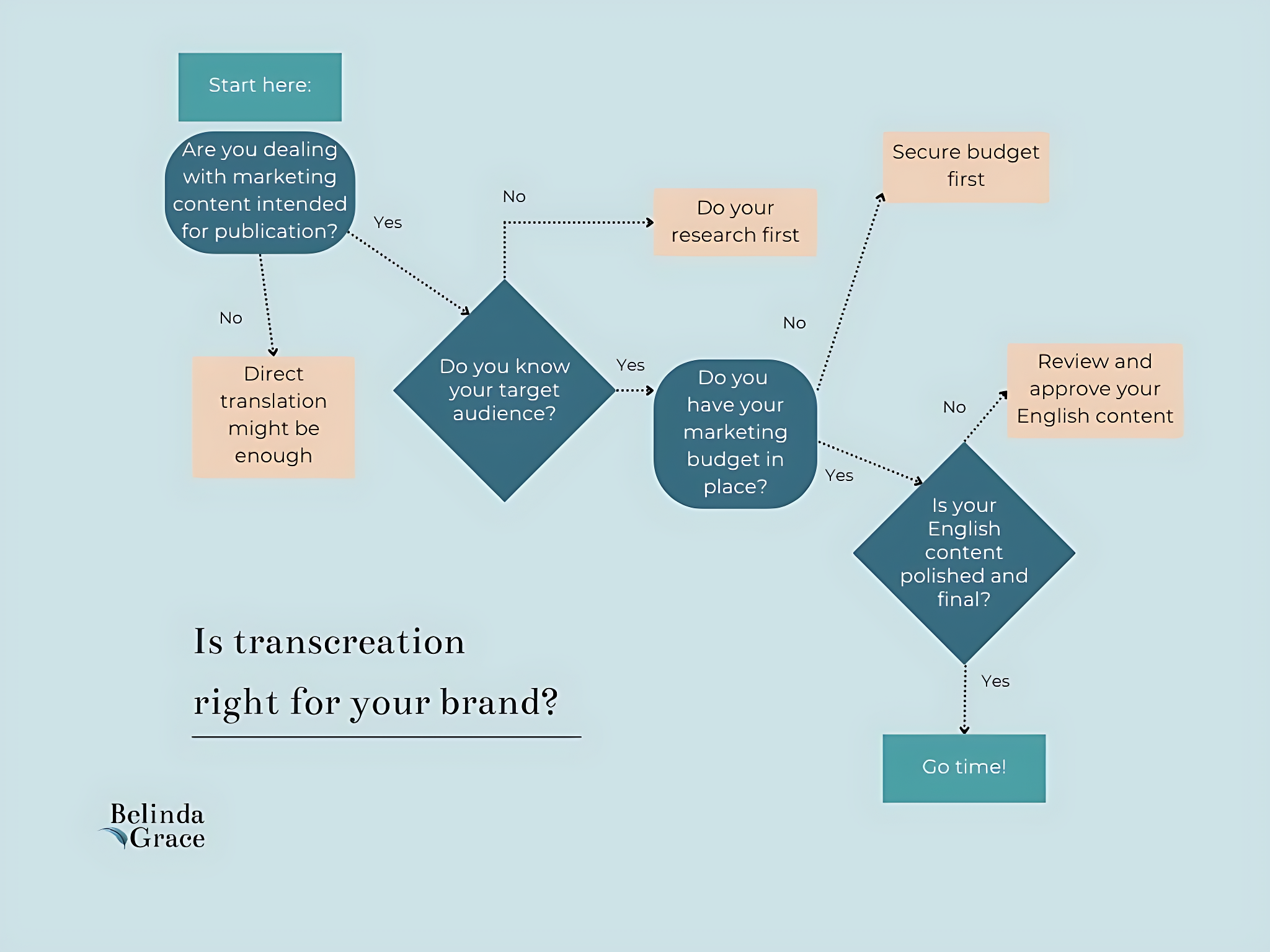
So, how do you decide between translation and transcreation? It all comes down to intent, audience and purpose. Some parts of your marketing content may call for precision, while others rely on emotional impact and cultural nuance.
A skilled transcreator carefully weighs these factors before deciding how far to move from the source material. The real value lies in trusting your transcreation partner to make those strategic choices while staying true to your tone of voice – and keeping you in the loop from brief to handover.
When your message feels native, you earn your audience’s trust – and that’s where language becomes a powerful asset.
Not sure if you need translation or transcreation for your content project?
view here